Author: CHOCOMACH
March 14, 2026
9980
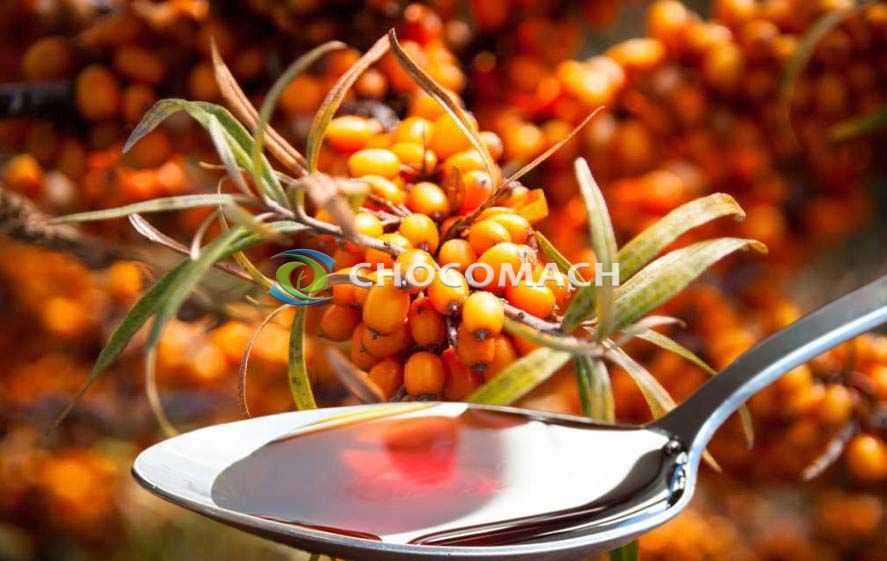
Seabuckthorn, a distinctive plant offering both ecological and economic advantages in Northwest China, has long seen the conservation and development of its germplasm resources as a key focus of the industry, according to the National Forestry and Grassland Administration. Recently, a special research report published in China Oils and Fats conducted a systematic analysis of five seabuckthorn species from the main producing areas in Xizang, namely wild Hippophae tibetana, Hippophae salicifolia, Hippophae neurocarpa, Hippophae yunnanensis, and Hippophae gyantsensis, providing core scientific evidence for the efficient utilization of Xizang seabuckthorn germplasm resources.
The landmark findings show that Xizang seabuckthorn seed oil and fruit oil feature high oil content, excellent fatty acid composition, and rich carotenoid content, making them a natural nutritional resource with great development value.
This study accurately measured the oil content of the pulp and seeds of the five seabuckthorn species, establishing quantitative criteria for raw material screening:
| Part | Oil Content Range of 5 Seabuckthorn Species | Dominant Species & Data |
|---|---|---|
| Pulp | 13.13%–22.32% | Hippophae gyantsensis pulp has the highest oil content at 22.32%, far exceeding other species |
| Seed | 9.17%–16.59% | Hippophae neurocarpa seed has the highest oil content at 16.59%, with a prominent seed yield advantage |
High oil content means more active ingredients can be extracted per unit of raw material, greatly reducing production loss and costs, and laying a foundation for large-scale development.
Seven fatty acids were detected in both the fruit oil and seed oil of the five seabuckthorn species, forming differentiated nutritional ratios, with Hippophae tibetana standing out prominently:
Core fatty acids in fruit oil: linoleic acid, palmitic acid, oleic acid
Core fatty acids in seed oil: linoleic acid, linolenic acid, oleic acid
All are essential or beneficial fatty acids for the human body.
In fruit oil, the contents of oleic acid, vaccenic acid, and linolenic acid rank first among the five species. These three components are key nutrients for regulating blood lipids, protecting the cardiovascular system, and maintaining the skin barrier.
In seed oil, the contents of palmitoleic acid, vaccenic acid, and linoleic acid lead the group. Among them, palmitoleic acid (Omega-7) is a unique precious component of seabuckthorn, helping maintain digestive tract health and metabolic balance.
This fatty acid combination of "high content + excellent ratio" distinguishes Xizang seabuckthorn seed oil/fruit oil from ordinary oils, making it a high-quality raw material for nutritional supplements and functional food development.
Carotenoids are the core antioxidant components of seabuckthorn. This determination covered five types: lutein, zeaxanthin, cryptoxanthin, β-carotene, and lycopene, with breakthrough conclusions:
The total carotenoid content in the pulp of the five seabuckthorn species ranged from 45.56 to 462.52 μg/g, with significant differences.
Only one species had all components detected: only Hippophae tibetana pulp contained all five carotenoids, while the other four species lacked some components.
Absolute content leadership: The individual and total contents of lutein, zeaxanthin, cryptoxanthin, and lycopene in Hippophae tibetana pulp were significantly higher than those in the other four seabuckthorn species, making it a high-quality source of natural carotenoids (National Forestry and Grassland Administration).
Carotenoids can be converted into vitamin A, with multiple effects such as anti-oxidation, eye protection, and immunity enhancement, providing broad space for the development of health products, cosmetics, and functional foods.
Based on the research data from China Oils and Fats, Xizang seabuckthorn has become a "high-quality representative" of seabuckthorn germplasm resources with three core advantages: high oil content, excellent fatty acid ratio, and full-category high-content carotenoids.
Its seed oil/fruit oil is not only rich in more than 140 bioactive components but also achieves breakthroughs in key nutritional indicators, making it an ideal raw material for food, health products, cosmetics, feed additives, and other fields. The CHOCOMACH fully automatic hydraulic oil press supports the green development of China's seabuckthorn processing industry.


Service Tel:
+86 136 0865 6963
+86 199 3799 5959
0086 0379-61127277

Email:
chocooilpress@gmail.com info@chocomach.com

Wechat:


WhatsApp:
+86 199 3799 5959